Ketamine Therapy for Treatment-Resistant Depression: What to Expect
Living with major depressive disorder can feel like navigating an unending fog. When standard first-line interventions such as selective serotonin reuptake inhibitors, combination pharmacotherapies, and years of talk therapy fail to lift that weight, the emotional exhaustion can become overwhelming. In clinical psychiatry, this challenging reality is known as treatment-resistant depression. For individuals who have spent months or years cycling through prescriptions with little to no relief, the lack of progress often breeds a profound sense of helplessness.
Over the past decade, ketamine therapy has emerged as one of the most significant advancements in modern mental healthcare. Originally developed in the 1960s as a surgical anesthetic, ketamine is now recognized for its rapid and robust antidepressant properties when administered in carefully controlled, sub-anesthetic doses. If you or a loved one is exploring this therapeutic pathway, understanding how ketamine works, what happens during an infusion, and how to navigate the recovery process can demystify the experience and help you make an informed decision.
Understanding Treatment-Resistant Depression and How Ketamine Works
Major depression is typically labeled treatment-resistant when an individual does not achieve significant symptom reduction after completing at least two adequate trials of different antidepressant classes at therapeutic dosages. Traditional oral antidepressants primarily target monoamine neurotransmitters—namely serotonin, norepinephrine, and dopamine. While these medications help millions, they operate on a delayed timeline, often requiring six to eight weeks to alter neural signaling, and they do not work for every neurochemical profile.
Ketamine operates through an entirely different biological pathway. Instead of focusing on monoamines, ketamine acts as an antagonist at the N-methyl-D-aspartate (NMDA) receptor, which interacts directly with glutamate, the primary excitatory neurotransmitter in the human brain. Chronic severe stress and prolonged depression can damage the dendritic spines and synaptic connections within the prefrontal cortex and hippocampus, effectively shrinking the brain’s communication network.
By briefly blocking NMDA receptors, ketamine triggers a downstream surge of glutamate, activating AMPA receptors and stimulating the release of brain-derived neurotrophic factor. This process encourages rapid synaptogenesis—the physical regrowth and repair of damaged synaptic connections. In practical terms, ketamine enhances neuroplasticity, temporarily giving the brain the biological flexibility it needs to break free from entrenched, repetitive cycles of negative thinking.
Clinical Forms of Ketamine Administration
Medical providers administer ketamine for depression through several distinct protocols, each with specific procedural frameworks and physiological absorption rates.
Intravenous Infusions
Intravenous infusion remains the most widely researched method for managing treatment-resistant depression. During an infusion, a clinician inserts an IV catheter into a vein in your arm or hand, delivering a precisely measured, weight-based dose over approximately 40 to 45 minutes. Because the medication enters the bloodstream directly, IV administration offers 100 percent bioavailability and allows the medical team to make immediate micro-adjustments or pause the infusion if you experience discomfort.
Intranasal Esketamine
Esketamine is an isolated chemical mirror-image (enantiomer) of the ketamine molecule. Delivered via a pre-packaged nasal spray device, it is approved specifically for adults with treatment-resistant depression or major depression accompanied by acute suicidal thoughts, provided it is taken in tandem with an oral antidepressant. Because of regulatory safety frameworks, esketamine cannot be taken at home. Patients must self-administer the spray inside a certified medical clinic under direct clinical observation and remain under monitoring for at least two hours afterward.
Intramuscular Injections and Sublingual Formulations
Some specialized clinics offer intramuscular injections, administering the dose via a syringe into a muscle, often divided into two intervals spaced a few minutes apart to smooth out the onset. Sublingual lozenges or troches dissolve under the tongue and have lower, more variable absorption rates; clinicians generally reserve them for at-home maintenance regimens after a patient achieves stability through in-clinic induction.
Preparing for Your First Session: The Intake Evaluation
A legitimate ketamine clinic prioritizes comprehensive screening before scheduling any treatments. Ketamine is a powerful psychoactive compound that produces transient elevations in blood pressure and heart rate, meaning proper medical clearance is non-negotiable.
Your initial evaluation will include a detailed psychiatric history alongside a physical health assessment. Clinicians will review your cardiovascular health, assess your baseline vitals, and screen for conditions that may preclude treatment, such as uncontrolled hypertension, unstable cardiovascular disease, active substance abuse, or personal and family histories of psychosis and bipolar mania.
Ahead of your first appointment, the clinic staff will provide pre-treatment instructions:
-
Fast appropriately: Avoid solid foods for at least four hours and clear liquids for two hours prior to the appointment to prevent nausea.
-
Review your morning medications: Certain sedatives, such as benzodiazepines, can reduce the effectiveness of ketamine, while stimulants may exacerbate blood pressure spikes. Your provider will tell you which medications to take or hold.
-
Arrange reliable transportation: You cannot drive or operate machinery for the rest of the day following an infusion. You must arrange for a trusted friend, family member, or ride service to take you home.
-
Dress for comfort: Wear loose, comfortable clothing with easy access to your arm for the IV and blood pressure cuffs.
Inside the Clinic: What the Treatment Experience Feels Like
Arriving for a ketamine session can trigger natural apprehension, particularly if you have never experienced an altered state of consciousness. Clinics intentionally design treatment rooms to feel calm, quiet, and distinctly non-hospital-like.
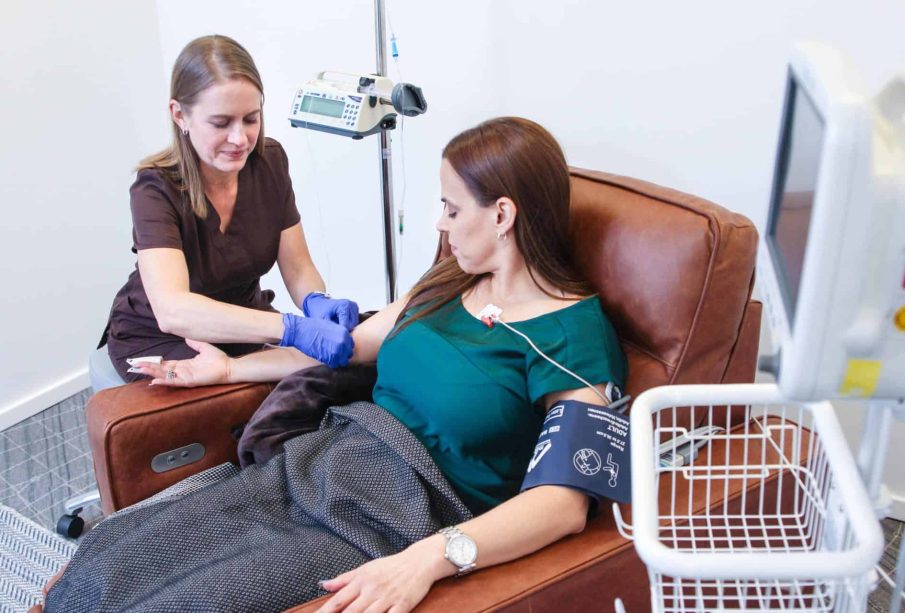
You will typically recline in a comfortable armchair or medical recliner. A nurse or physician will place monitoring equipment on you—usually a blood pressure cuff, a pulse oximeter on your finger, and sometimes heart-monitoring leads. Many patients choose to wear an eye mask and use noise-canceling headphones playing gentle, lyric-free instrumental music to minimize external sensory interruptions.
Once the infusion begins, physical and perceptual changes usually manifest within ten to fifteen minutes. The sensations vary from person to person, but patients frequently describe:
-
Mild dissociation: A feeling of detached awareness, as though you are observing your thoughts, memories, or bodily sensations from an objective, compassionate distance rather than being consumed by them.
-
Altered sensory perception: Colors behind closed eyes may seem richer, sound may feel spatial or resonant, and your limbs might feel exceptionally heavy, floaty, or numb.
-
Emotional softening: Painful memories or heavy depressive thoughts that normally feel suffocating may surface without the usual accompanying panic or dread, allowing you to examine them without distress.
Transient physical side effects are common and resolve quickly once the infusion stops. These can include mild dizziness, dry mouth, blurred vision, a feeling of drunkenness, and slight nausea. If nausea occurs, staff can immediately administer an antiemetic such as ondansetron through your IV line. At all times, clinical staff remain in the room or monitor you closely via visual and digital feeds.
The Post-Treatment Recovery Window
After the infusion finishes, the acute perceptual effects dissipate rapidly, usually within 15 to 20 minutes. You will remain in your chair or a dedicated recovery space for 30 to 60 minutes while your blood pressure normalizes and your mental clarity returns.
You may feel physically clumsy, slightly fatigued, or mentally quiet immediately afterward. Most clinics recommend keeping your evening schedule free of work, demanding conversations, or complex chores. Eating a nourishing, gentle meal, resting, and heading to bed early will help your body process the physical exertion of the session.
The most valuable therapeutic window begins after you leave the clinic. For 24 to 72 hours following administration, the brain enters an elevated state of neuroplasticity. Because your neural pathways are more receptive to change, this post-infusion window is an exceptional time to integrate healthy habits, practice mindfulness, journal, and participate in psychotherapy. Working with a therapist during this phase—an approach known as ketamine-assisted psychotherapy—allows you to replace rigid cognitive distortions with constructive, lasting behavioral perspectives.
Treatment Protocols, Expectations, and Maintenance
Ketamine is not an instantaneous cure-all; rather, it functions as a biological reset that creates room for emotional healing. In clinical practice, providers usually structure the initial induction protocol as six infusions over a two- to three-week period.
Some patients experience a noticeable lifting of depressive heaviness or relief from passive suicidal ideation within hours of their first or second session. For others, improvement is gradual and cumulative, becoming apparent toward the middle or end of the induction series. It is also completely normal to experience occasional emotional fluctuations during the series, where a challenging session is followed by a period of calm introspection.
Because ketamine’s biological effects are transient, most individuals require a long-term maintenance strategy once the induction phase ends. This might entail periodic “booster” infusions spaced anywhere from three weeks to several months apart, guided by symptom return. Over time, many patients find they can stretch the intervals between maintenance visits as lifestyle adjustments, therapy, and routine habits take root.
Making an Informed Decision
Ketamine therapy represents a transformative intervention for individuals who have exhausted standard psychiatric options. While the financial investment can be notable—insurance coverage varies significantly between IV infusions and nasal esketamine—the potential for reclaiming clarity and function is substantial.
If you are considering this treatment, seek out established clinics staffed by licensed physicians, nurse anesthetists, or psychiatrists who emphasize comprehensive evaluations, continuous monitoring, and structured integration support. With realistic expectations, proper medical supervision, and active therapeutic integration, ketamine can serve as a powerful catalyst on the journey back toward emotional vitality.