

What Is a Full-Grain Leather Backpack and Why Is It the Highest Quality Bag You Can Buy?
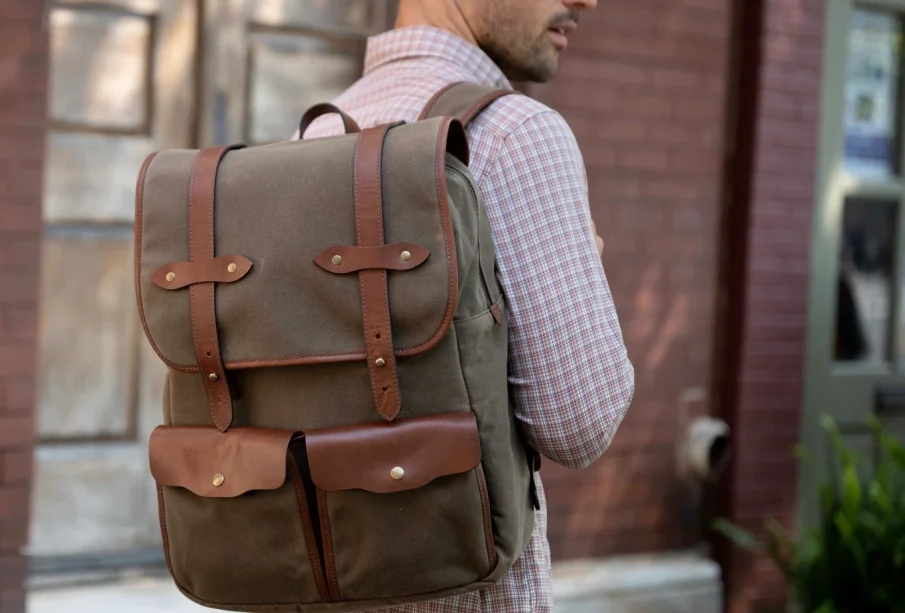
A full-grain leather backpack is a bag made from the outermost layer of the animal hide — the layer that includes the complete, unaltered grain surface with all natural markings, pores, and fibre density intact — making it the strongest, most durable, and most expensive grade of leather available, capable of lasting 20+ years with minimal maintenance while developing a distinctive patina unique to each individual bag.
The leather industry uses grading language that deliberately confuses buyers. ‘Genuine leather’ sounds premium but is actually one of the lowest commercial grades. ‘Top-grain’ sounds like the pinnacle but is the second tier with the best fibres sanded away. Full-grain sits at the absolute top of the hierarchy — the unprocessed, unaltered surface of the hide with maximum fibre density, natural character, and the structural integrity that makes 20-year lifespans possible.
Understanding this distinction is the single most important factor in choosing a leather backpack that lasts. Buyers who do not know the difference between full-grain and genuine leather overpay for low-quality products while buyers who do know consistently make purchases they never regret. This guide explains the grading system, why it matters, how to verify full-grain claims, and what to look for when shopping for a genuine full grain leather rucksack.
What Makes Full-Grain Leather Different from Other Grades?
| Leather Grade | What It Is | Durability | Patina | Price |
| Full-Grain | Complete outer hide surface, unaltered | Highest — 20+ years | Develops rich unique character | $$$ |
| Top-Grain | Outer surface sanded and refinished | High — 10–15 years | Minimal — surface is sealed | $$ |
| Genuine Leather | Lower splits, heavily processed | Moderate — 3–7 years | None — deteriorates instead | $ |
| Bonded Leather | Leather scraps glued to fabric backing | Low — 1–3 years | None — peels and flakes | $ |
| Vegetable-Tanned | Full-grain tanned with plant extracts | Highest — 25+ years | Most dramatic colour evolution | $$$$ |
The critical difference is fibre structure. Full-grain leather retains the tight, interlocking fibre network of the original hide surface. This network is densest at the outer layer. When this layer is sanded away — as in top-grain processing — the remaining surface is structurally weaker, less naturally water-resistant, and physically incapable of developing the patina that makes leather improve rather than degrade with age.
Why Does Patina Development Matter in a Leather Backpack?
Patina is the gradual colour deepening, surface characterisation, and tonal variation that develops when full-grain leather is handled, exposed to ambient light, and absorbs natural oils from hands and environment over months and years. It is not wear damage — it is the material maturing and developing individual character that makes each bag one of a kind.
On a quality leather backpack, patina creates visible darkening at high-contact areas — the handles, strap attachment points, front flap, and zip pulls — while maintaining lighter tones on less-touched surfaces. This contrast creates visual depth and warmth. By year 3 to 5, the bag has a dimensional quality that no synthetic material and no lower-grade leather can produce regardless of price.
This is the core value proposition of full-grain leather and the reason it commands a premium. Every other bag material — nylon, polyester, canvas, bonded leather, genuine leather — degrades with daily use. Full-grain leather improves. The bag you carry daily for five years will genuinely look and feel better than the day you bought it. That is not marketing. That is chemistry.
What Is Vegetable-Tanned Leather and Why Is It Important?
Vegetable tanning is the traditional method of treating raw hides using natural plant extracts — tree bark, leaves, fruits, and roots — rather than the chemical chromium salts used in modern chrome tanning that processes 85% of the world’s commercial leather. The vegetable tanning process takes 30 to 60 days per hide compared to 1 to 2 days for chrome tanning.
The result is a firmer, more structured leather with richer natural colour depth and the most dramatic patina development of any tanning method available. A vegetable tanned leather backpack in natural tan will shift through honey, caramel, amber, and deep cognac over years of use — a colour journey that chrome-tanned leather physically cannot replicate because the chromium salts lock the colour in place.
The trade-off is price and initial stiffness. Vegetable-tanned bags cost 30 to 50% more than chrome-tanned equivalents and need a break-in period of 2 to 4 weeks before the leather softens to its working flexibility. After break-in, the leather conforms to your specific carrying pattern and develops a personalised feel that improves with every use.
How Do You Verify Full-Grain Leather When Buying Online?
Check the product description for specific grade language.
A quality leather backpack will explicitly state ‘full-grain leather’ in the product specifications. Vague terms like ‘genuine leather,’ ‘real leather,’ ‘100% leather,’ or ‘premium leather’ are red flags — reputable brands are specific about their leather grade because it is their primary selling point.
Look for natural surface markings in product photos.
Full-grain leather shows natural grain variation, subtle colour differences across the surface, and occasional marks from the animal’s life — healed scratches, insect bites, wrinkles, or brand marks. A perfectly uniform surface with zero variation in close-up product photos suggests corrected, coated, or embossed leather pretending to be full-grain.
Read the tanning method.
Brands using full-grain leather will specify the tanning method — vegetable-tanned, chrome-tanned, or combination-tanned. If no tanning method is mentioned, the leather is likely chrome-tanned lower-grade material where the tanning method is not a selling point.
Evaluate the price realistically.
Full-grain leather backpacks from reputable brands start at approximately $150 and typically range from $200 to $500 depending on size, features, and construction method. A ‘full-grain leather backpack’ priced at $50 is almost certainly mislabelled — the raw material alone costs more than that at full-grain grades.
How Do You Care for a Full-Grain Leather Backpack?
Full-grain leather is the lowest-maintenance leather grade precisely because its intact surface naturally resists moisture penetration and staining better than any processed alternative. The basic care routine is genuinely simple: wipe with a damp cloth monthly to remove surface dust and residue, condition with a plant-based or beeswax leather balm every 4 to 6 months, and store in a breathable cotton dust bag stuffed with tissue paper when not in regular use.
Avoid leather care products containing silicone or petroleum derivatives. These create a surface seal that blocks the leather’s natural ability to breathe, absorb oils, and develop patina. The entire point of owning full-grain leather is the ageing process — using products that prevent that process defeats the purpose of the investment. Stick to natural-base conditioners designed for unfinished or minimally finished leather.
If the bag gets wet, wipe off excess water with a soft cloth and allow it to air dry at room temperature away from direct heat sources. Leather that dries too quickly from heat cracks because the moisture evaporates unevenly, creating dry zones that lose flexibility. Patience during drying is the single most important care habit.
Browse the complete Rustic Town vegetable tanned leather backpack collection — every bag uses the highest-grade leather with detailed care instructions included.
Shop the Rustic Town quality leather backpack range — certified full-grain, handcrafted in Rajasthan, with a lifetime of patina development ahead.
Frequently Asked Questions
Q: What is full-grain leather?
A: The outermost layer of the animal hide with the complete grain surface intact — unaltered, unsanded, and unprocessed. It is the strongest, most durable leather grade available and the only grade that develops a genuine patina with age.
Q: How long does a full-grain leather backpack last?
A: 20+ years with basic monthly cleaning and quarterly conditioning. Many full-grain bags remain functional and aesthetically superior at 30+ years. The material genuinely improves with age rather than degrading.
Q: Is full-grain leather worth the extra cost?
A: Yes. A $200 full-grain bag over 20 years costs $10 per year. A $60 genuine leather bag replaced every 4 years costs $15 per year and never develops character or improves with use.
Q: What is the difference between full-grain and top-grain leather?
A: Top-grain leather has the outer surface sanded and refinished to remove natural markings. This weakens the fibre structure by 30 to 40%, reduces durability, seals the surface against patina development, and removes the natural grain character that makes full-grain distinctive.
Q: How can I tell if my bag is really full-grain?
A: Look for natural grain variation, visible pores, and slight surface imperfections. Full-grain leather is never perfectly uniform. If the surface looks identical across every panel with no variation, it is likely corrected or coated leather.
Written by the Rustic Town Editorial Team | Updated January 2026
Rustic Town has been handcrafting leather goods in Rajasthan, India since 2013. Every bag in the collection uses full-grain or vegetable-tanned leather, brass hardware, and hand-stitched construction built to last decades.


